Full Arch Dental Rehabilitation in Wyomissing, PA | Malloy & Devine Dental
Malloy & Devine Dental · Wyomissing, PA
A closer look at how severe wear, decay, and bite collapse are diagnosed and rebuilt using biomimetic, function-first planning.
Most dental problems show up one tooth at a time. But sometimes the issue isn’t a single filling or crown — it’s the entire bite. When wear, decay, and bone or tooth loss have added up over years or decades, patching individual teeth is no longer enough. This is where full arch dental rehabilitation comes in: a comprehensive, carefully planned approach to rebuilding an entire arch of teeth so it functions, fits, and looks the way it’s supposed to.
At Malloy & Devine Dental in Wyomissing, PA, full arch rehabilitation is never a one-size-fits-all procedure. It starts with understanding why the bite broke down in the first place, then designing a solution around each patient’s unique function.
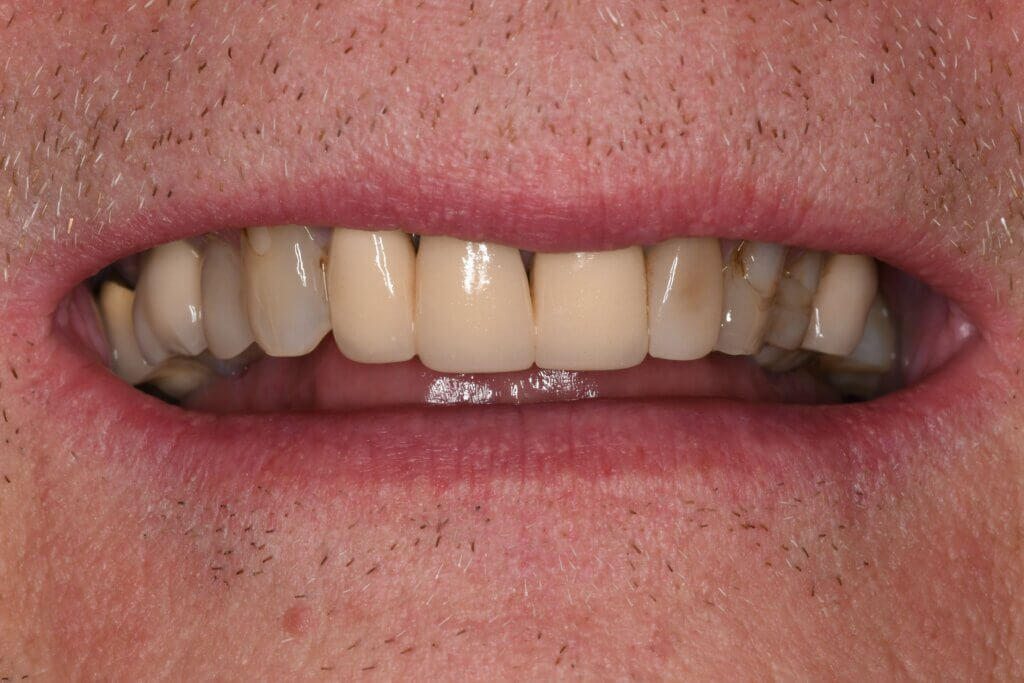
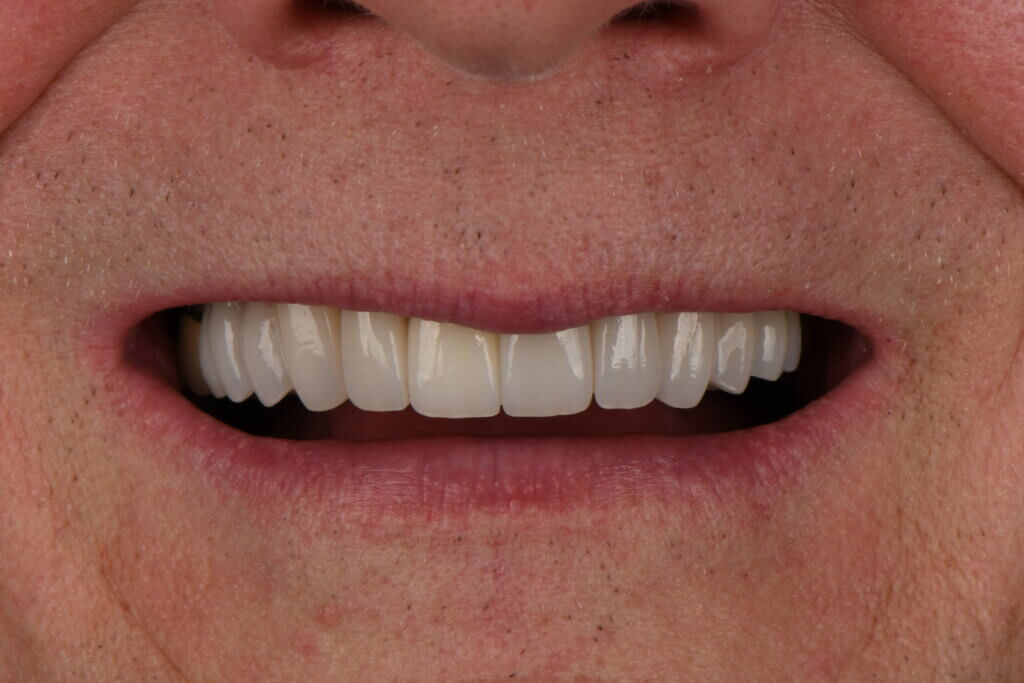
When Does a Full Arch Rehabilitation Become Necessary?
Full arch rehabilitation isn’t the first option for every patient — it’s reserved for cases where the entire chewing system has broken down. A few of the most common patterns we look for include:
Severe Wear
Years of grinding, clenching, acid erosion, or a poor bite relationship can wear teeth down significantly, shortening them and reducing the vertical space the jaw needs to close comfortably. Once wear reaches this stage, teeth often can’t be restored one at a time without creating new bite problems elsewhere.
Extensive Decay
When decay affects multiple teeth across an arch, especially around old fillings or crown margins, it’s often a sign that the whole system — bite, saliva flow, home care, and habits — needs to be addressed together, not just tooth by tooth.
Restricted Envelope of Function
The “envelope of function” is the space your lower jaw naturally moves through during chewing, speaking, and swallowing. When teeth wear unevenly or shift over time, that envelope becomes restricted, forcing the jaw into an unnatural path. This often shows up as chipping, sensitivity, or teeth that keep breaking despite repeated repairs.
Frictional Wear Patterns
Distinct wear facets — flat, shiny, or matching patterns where upper and lower teeth rub together — tell us a lot about how the bite is functioning (or malfunctioning). These patterns help identify exactly where the bite is out of balance and guide how the new bite should be designed.
Why it matters: Treating these cases tooth by tooth often fails, because the underlying bite relationship never gets corrected. Full arch rehabilitation treats the cause, not just the symptoms.
Planning the Bite with Kois Principles
Before any tooth is touched, the bite has to be understood. Dr. Malloy’s training through the Kois Center informs how full arch cases are diagnosed and planned, using a system built around function, esthetics, and long-term stability rather than guesswork.
Kois Deprogrammer
Many patients with worn or collapsed bites have adapted to a habitual bite position that isn’t actually where their jaw joint wants to close. A Kois deprogrammer is a small removable appliance worn for a period of time that relaxes the jaw muscles and allows the bite to “deprogram” away from that learned position. This reveals the true, unstrained relationship between the upper and lower jaw — the foundation everything else is built on.
Kois Dento-Facial Analyzer (Kois Glasses)
Once we know where the jaw wants to sit, the next question is how the smile should look. The Kois Dento-Facial Analyzer, often referred to as Kois glasses, is used to record the exact relationship between a patient’s facial midline, horizon, and the position of the upper teeth. This information is transferred to the dental lab so that the new smile is designed level, centered, and aligned to the patient’s face — not just to the model in front of the technician.
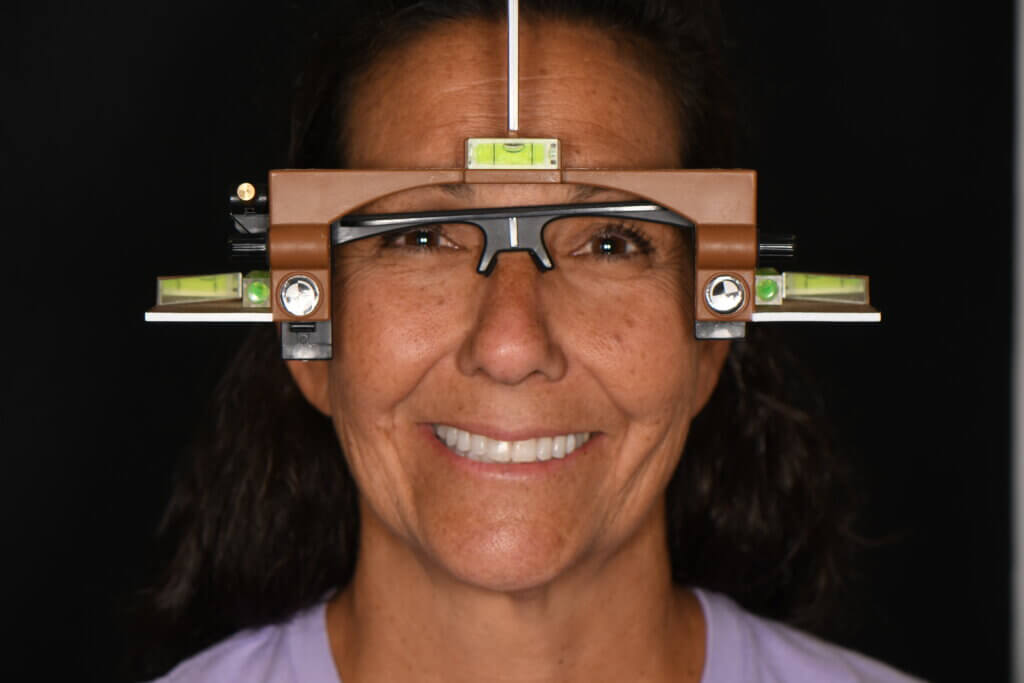
Digital Smile Design: Building the Case Before We Touch a Tooth
Full arch rehabilitation is planned extensively before treatment ever begins. A full series of photographs is taken — facial views, retracted views, close-ups of wear patterns, and images from multiple angles — alongside detailed digital scans of the teeth and bite.
These photos and records allow the case to be digitally designed before any irreversible steps are taken. Proposed tooth positions, lengths, and contours can be previewed and adjusted on screen, which means patients can often see a preview of the plan, and the entire team can confirm the design will meet both functional and esthetic goals before treatment starts.
Why Full Photo Documentation Matters
A complete photographic and digital record does more than guide the lab — it becomes the blueprint for the entire rehabilitation, helping identify wear patterns, midline discrepancies, gum architecture, and lip dynamics that are easy to miss with a quick look in the mouth.
Opening the Vertical Dimension of Occlusion (VDO)
When teeth have worn down significantly, there often isn’t enough room to rebuild them to a healthy shape and thickness without changing how far the jaw closes. This is where opening the vertical dimension of occlusion, or VDO, comes in.
By carefully increasing the vertical space between the upper and lower jaw, we create room to properly design tooth shape, contour, and function — without teeth ending up too short, too bulky, or in the wrong bite relationship. This isn’t an arbitrary adjustment; the new VDO is planned based on facial proportions, joint position, muscle comfort, and how the patient can speak and chew naturally at the new dimension.
Opening the VDO in a controlled, tested way is often the difference between a rehabilitation that lasts and one that quickly breaks down again.
Testing the Plan: Deprogrammers and the Leaf Gauge
Before finalizing a new bite position, it needs to be verified. In addition to the Kois deprogrammer used earlier in diagnosis, a simple tool called a leaf gauge — a small stack of thin plastic shims — can be used to help the jaw find and hold its relaxed, joint-based position while the bite relationship is recorded. This step helps confirm that the planned bite is accurate, repeatable, and comfortable before it’s built into the final restorations.
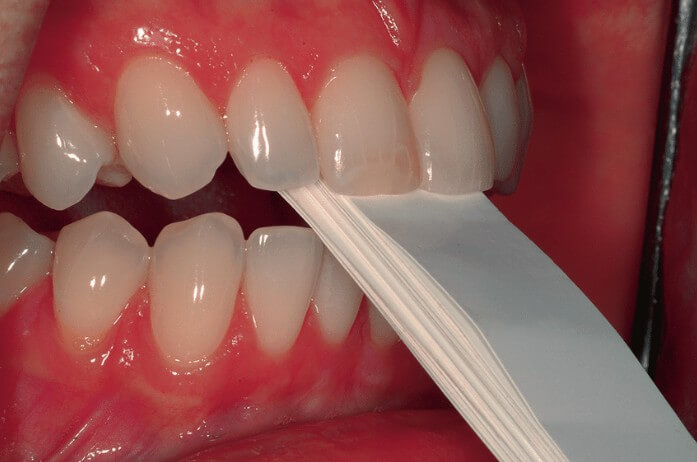
A Biomimetic Approach to Full Arch Rehabilitation
Even in complex, full arch cases, the goal at Malloy & Devine Dental is always to preserve as much healthy tooth structure as possible. Every design decision — from where the VDO opens to how each tooth is contoured — is made with long-term biomimetic principles in mind, so the final result supports the natural strength and health of the teeth and supporting structures, not just their appearance.
Full arch rehabilitation is one of the most involved procedures in dentistry, but with careful diagnosis, digital planning, and function-first design, it gives patients with severely worn or broken-down bites a real path back to comfortable, lasting function.
Wondering If Full Arch Rehabilitation Is Right for You?
If you’re dealing with worn, broken, or failing teeth across your bite, Dr. Malloy and Dr. Devine can walk you through a full evaluation and personalized plan. Call (610) 320-9993
Malloy & Devine Dental · 30 Commerce Drive, Suite 2, Wyomissing, PA 19610 © 2026 Malloy Devine Dental. All rights reserved. | @malloydevinedental